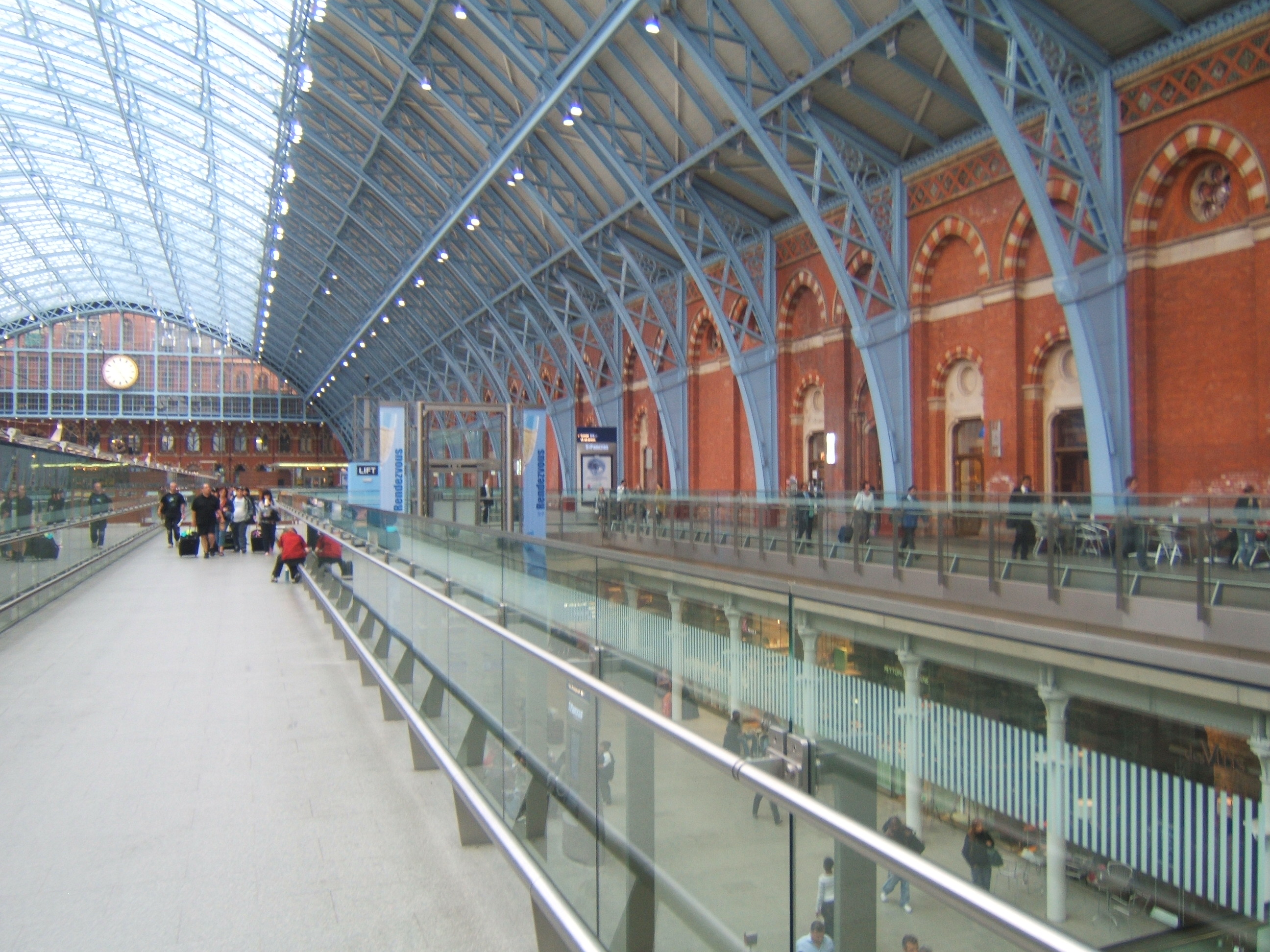
Today I try the newest challenge from WordPress. The Weekly Photo Challenge : From Lines To Pattern. I took this photo at St Pancras Station in London, UK. This is where the Eurostar arrives and departs in London. A great mixture of old and new. It is also the station that Harry Potter uses to go to Hogwarts.
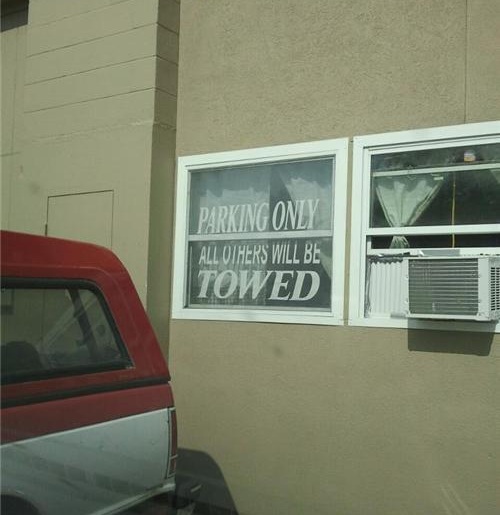
I’m thinking this one is has to be in Philadelphia, likely at the towing compound. Probably quite a few heads exploding as they mulled over the twist and turns of logic in its inherent evilness. I classify it as helpful, but only to the chosen few that can decipher the zen meaning behind it.
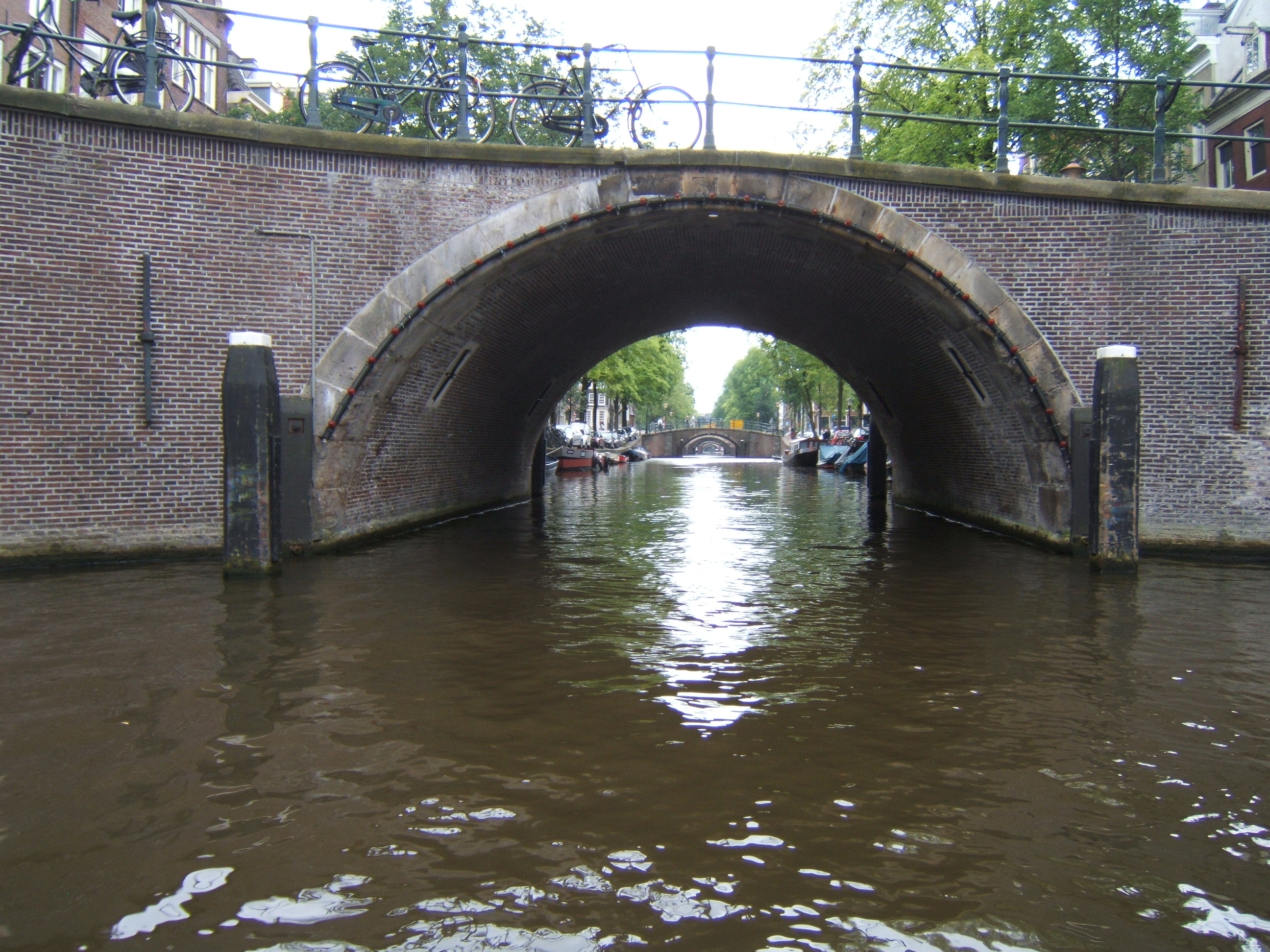
This week’s challenge – Weekly Photo Challenge: An Unusual POV. I chose this photo taken from a canal boat in Amsterdam. The city has about 1200 bridges, most similar to these. This makes for some stunning views as you traverse these routes, especially where they join, as in this shot.
This weeks photo challenge is simply titled, Weekly Photo Challenge: Sea. Those who follow me know that I have an affinity for the ocean, and may expect a shot of us sailing the Caribbean or something. Not happening. The shot I have chosen was taken in Eastbourne, UK in 2008. Eastbourne is on the English Channel. We were along the beach, when I noticed Lori’s young cousin standing on a pylon staring off into the sea. I always liked this picture and am happy to have had this opportunity to post it here. She captures almost exactly what I feel like when I am on or beside the sea. The sheer power of the ocean, and the peace it usually has is awe-inspiring and at the same time, contemplative.
Today’s educational sign will make eating pizza so much more enjoyable, or, in other words, the nanny state loses its’ perspective on reality. Or perhaps someone won a lawsuit against the box maker. I don’t know, but you have to admit it is very, very helpful.
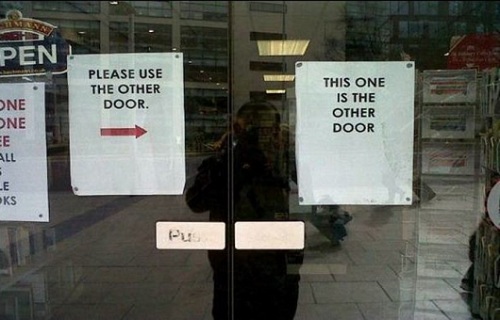
As a public service, I will be posting a series of helpful hints and educational signs that will be helpful in our daily lives. Enjoy today’s helpful sign that may actually save you some horrific injuries. Helpful hint for budding photographers, try not to do a selfie while capturing the shot.
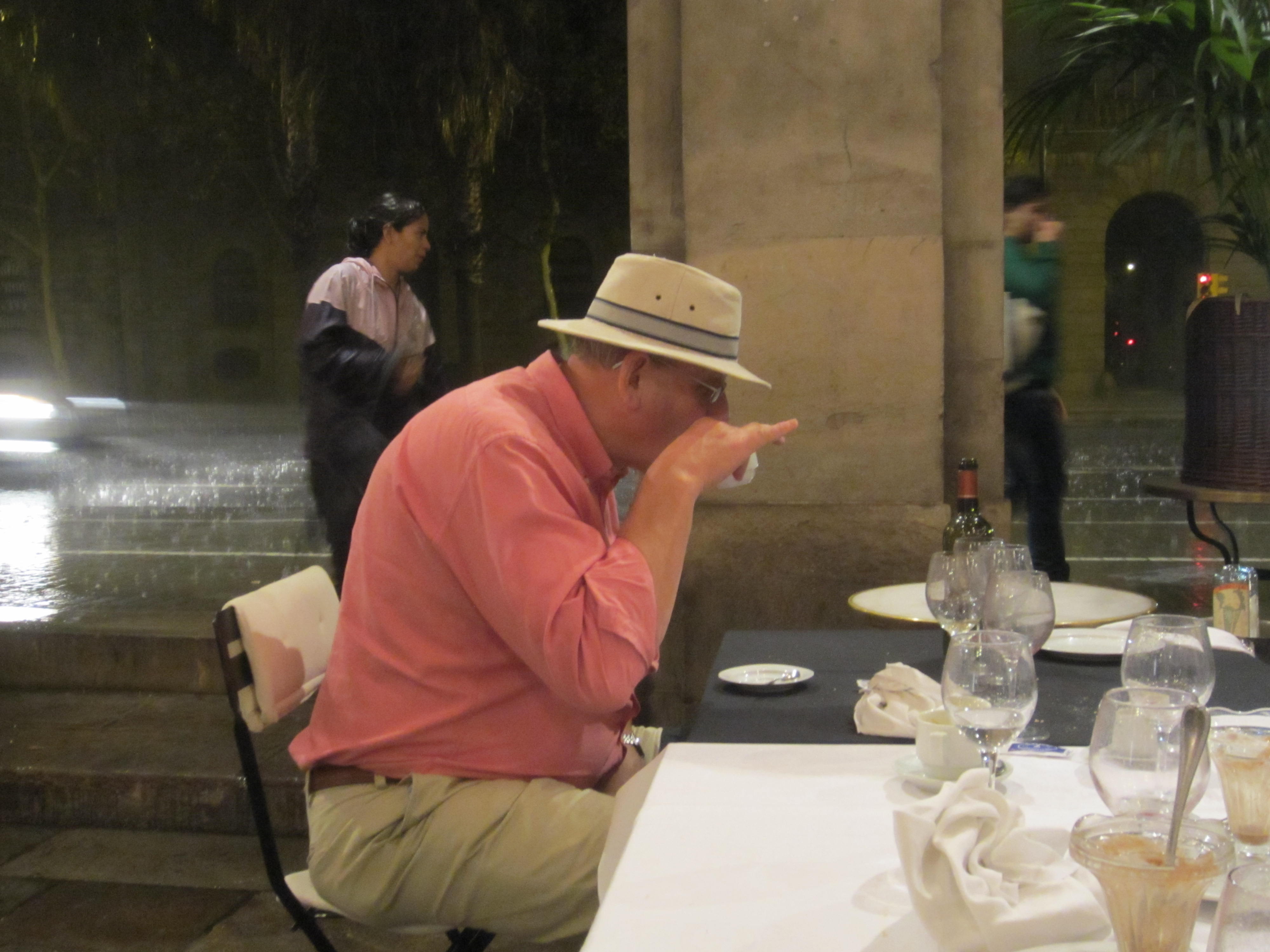
The task this week from WordPress is “Weekly Photo Challenge: Carefree”. This was especially hard to come up with something. I mean. 9 bajillion pictures and finding one that epitomizes carefree, a toughie. Then I ran across this beauty from our trip into Barcelona in October 2012. We were at a restaurant with some friends from the UK, when, quite suddenly, a pretty good thunderstorm rolled in. We were seated outdoors, under a bit of a covered part of the sidewalk. Wasn’t helping a lot, so we backed off closer to the walls of the building. John decided to stick it out, showing not a care as he downed his tea in the driving rain. Check the pounding rain on the pavement on the street, and a few very wet people. Classic.
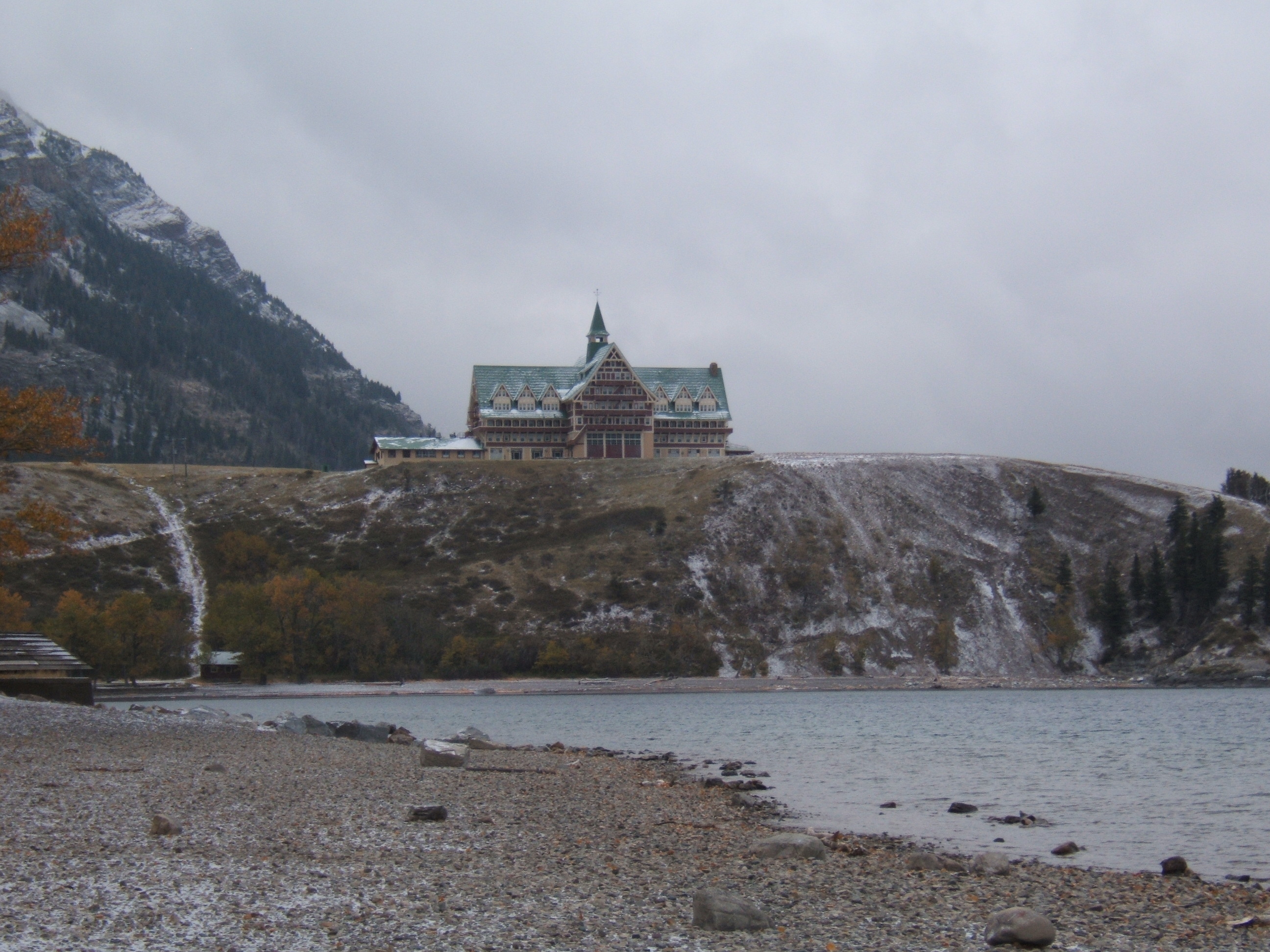
This week we have “Weekly Photo Challenge: One Shot, Two Ways”. An interesting concept. With digital cameras, most pictures we take are multiple shots of the same vista, done in different ways. This makes it very hard to come up with the perfect set. We’ll give it a go though.
I took these shots at Waterton Lake, Alberta in Canada. They are of a 1920’s vintage railway hotel known as the Prince Of Wales Hotel. Quite a stunning site. Waterton is part of the Canadian National Park System. It straddles the Canada-USA border and borders Glacier National Park in Montana. It was created in 1895m as Canada’s 4th national park. It was October when we were there and it was not a classic weekend weatherwise. Added to the photos though.
The U.S. Standard railroad gauge (distance between the rails) is 4 feet, 8.5 inches. That’s an exceedingly odd number.
Why was that gauge used?
Because that’s the way they built them in England , and English expatriates designed the U.S. Railroads.
Why did the English build them like that?
Because the first rail lines were built by the same people who built the pre-railroad tramways, and that’s the gauge they used.
Why did ‘they’ use that gauge then?
Because the people who built the tramways used the same jigs and tools that they had used for building wagons, which used that wheel spacing.
(Photo credit: Wikipedia)
Why did the wagons have that particular Odd wheel spacing?Well, if they tried to use any other spacing, the wagon wheels would break on some of the old, long distance roads in England , because that’s the spacing of the wheel ruts.
So, who built those old rutted roads?
Imperial Rome built the first long distance roads in Europe (including England ) for their legions. Those roads have been used ever since.
And the ruts in the roads?
Roman war chariots formed the initial ruts, which everyone else had to match for fear of destroying their wagon wheels..
Since the chariots were made for Imperial Rome , they were all alike in the matter of wheel spacing. Therefore, the United States standard railroad gauge of 4 feet, 8.5 inches is derived from the original specifications for an Imperial Roman war chariot. In other words, bureaucracies live forever.
Roman Forum (Photo credit: MarcelGermain)
So the next time you are handed a specification, procedure, or process, and wonder,
‘What horse’s ass came up with this?’, you may be exactly right.
Imperial Roman army chariots were made just wide enough to accommodate the rear ends of two war horses.
Now, the twist to the story:
When you see a Space Shuttle sitting on its launch pad, you will notice that there are two big booster rockets attached to the sides of the main fuel tank. These are solid rocket boosters, or SRBs.
The SRBs are made by Thiokol at their factory in Utah.
The engineers who designed the SRBs would have preferred to make them a bit larger, but the SRBs had to be shipped by train from the factory to the launch site. The railroad line from the factory happens to run through a tunnel in the mountains, and the SRBs had to fit through that tunnel. The tunnel is slightly wider than the railroad track, and the railroad track, as you now know, is about as wide as two horses’ behinds.
So, a major Space Shuttle design feature
Of what is arguably the world’s most advanced transportation system was determined over two
Thousand years ago by the width of a horse’s ass.
And you thought being a horse’s ass wasn’t important!
Now you know, Horses’ Asses control almost everything…….Explains a whole lot of stuff, doesn’t it?
Haven’t caught up on the beers I’ve sampled in a while. Lets give it a go.
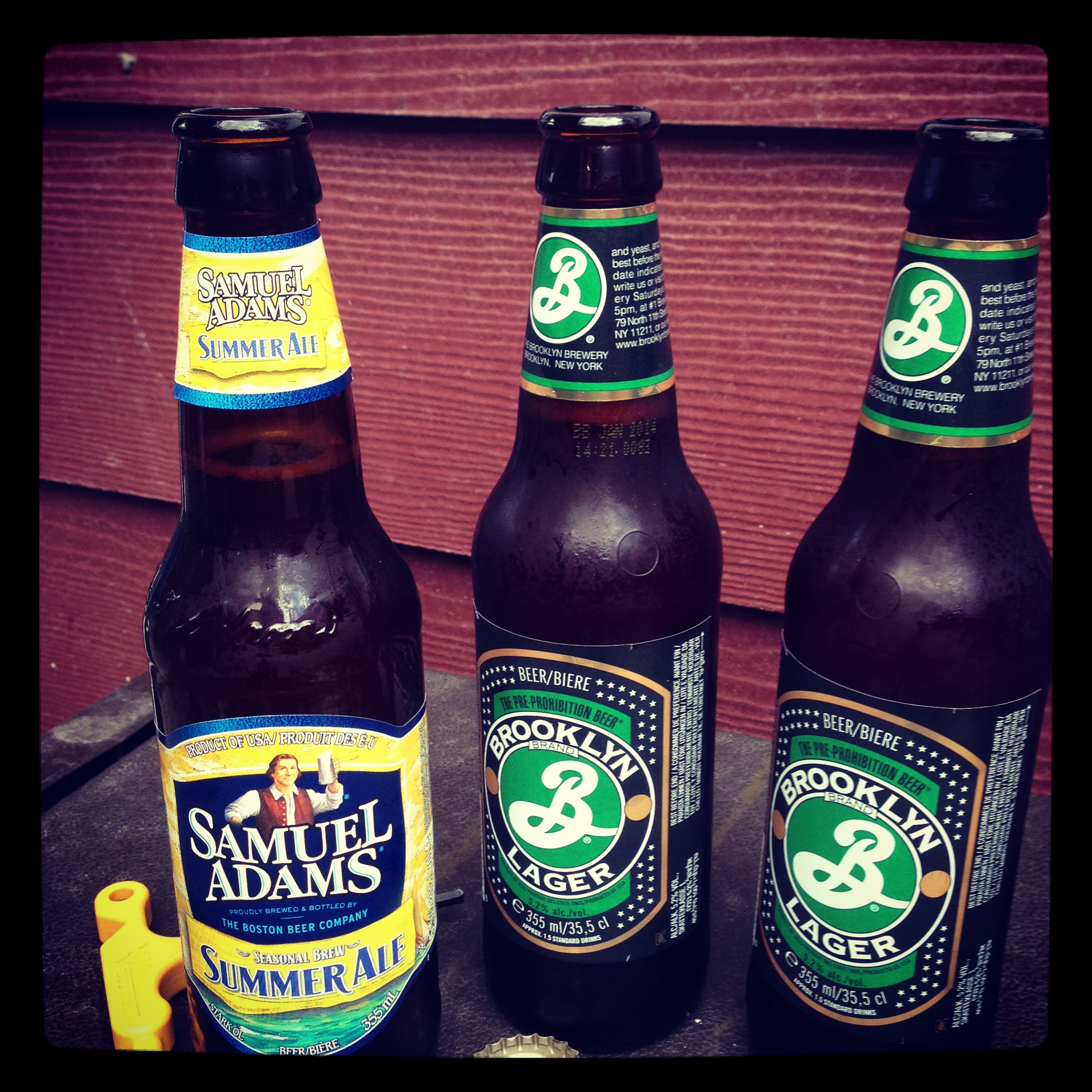
First up, a great couple of summer beers, a la my deck. Two great American “micro-breweries”. I italicize as both are bit bigger than that now, but both still have a great product. Brooklyn Lager and Samuel Adams Summer Ale.
Next up, we have a memory from our Antigua trip in April. Had never seen it before in Calgary, so had to buy it. Unfortunately, not as good as I remembered it. Carib Lager.
Had this one in Newark, New Jersey. Yuenling lager. Oldest brewery in the USA? Excellent beer.
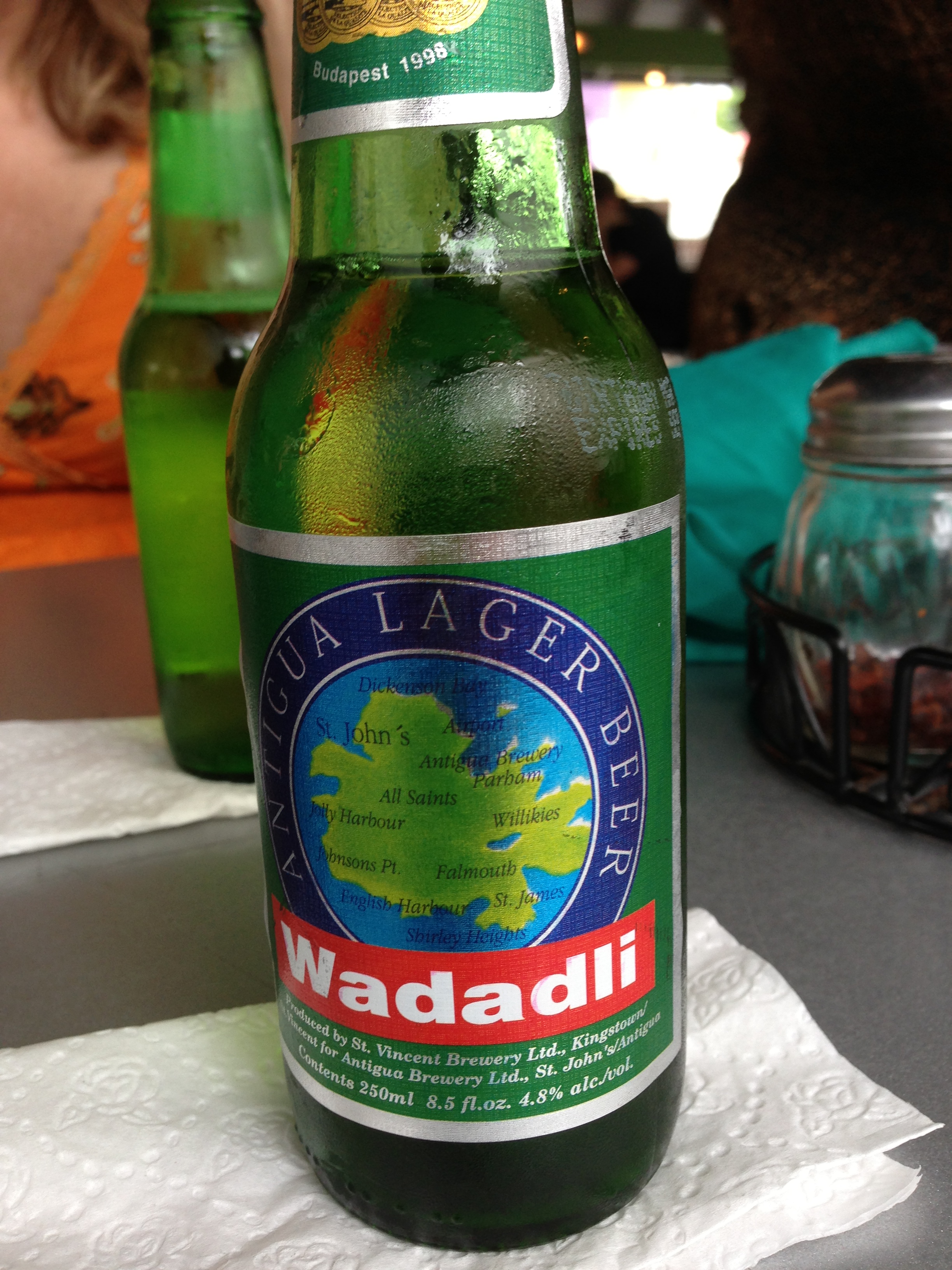
Next up, another beer out of Antigua, Wadadli. Liked it, not a main brand like Carib, a real local beer.